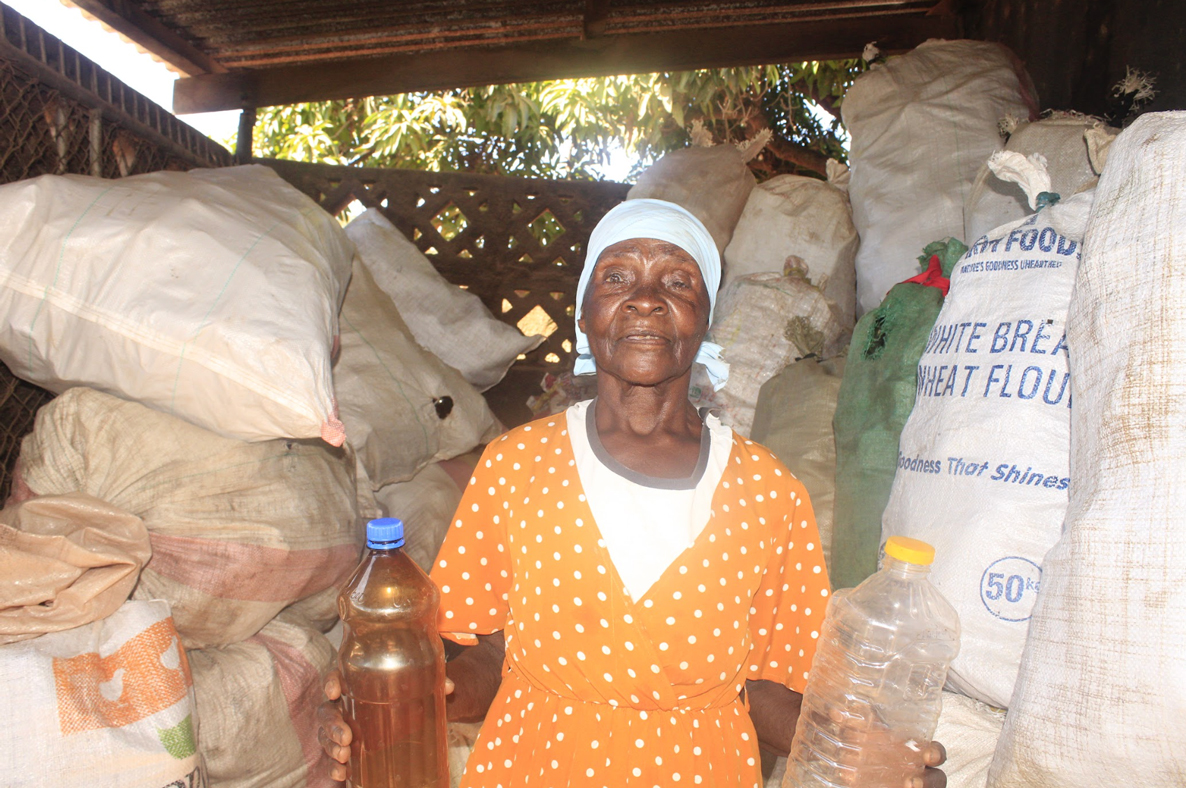
Gogo Esther Muringu who does recycling of plastic containers at Nazareth Old People’s Home, run by Caritas Chinhoyi.4
Nazareth Shelter, home for elderly destitute, is a welfare organisation of the Catholic Church under the jurisdiction of the Diocese of Chinhoyi. It is registered under the Public Voluntary Organization Act of Zimbabwe, (PVO 23/05). The home aims to protect the elderly from exploitation from some members of the community by ensuring that they have decent accommodation, meals and promote social interaction within themselves and other society members. It is affiliated to and operates incorporation with the society of St Vincent de Paul which is a registered Catholic welfare institution of lay people for the care and rehabilitation of the poor and elderly destitute. Up till end of June 2011, the Nazareth Shelter has been under the management of the Priest based at Corpus Christi Cathedral. Given the critical funding challenges facing the home, the Diocese tasked Caritas Chinhoyi to take over the management of the home in a bid to improve the resource mobilisation, being the humanitarian and development arm of the Diocese, the Nazareth Shelter community fulfils Caritas mission to up hold human dignity especially to the deprived, marginalised and vulnerable members of the society.
The residents range from Zimbabweans to aliens mainly from Malawi, Mozambique, Tanzania and South Africa. It also provides temporary shelter for stranded and desperate travellers. The majority of African elderly entered olds people’s home because of old age while some have lost social ties with their families since they left their homes long back searching for employment, while others were displaced by the Operation Restore Order (Murambatsvina) (2005) and the Fast track Land Reform Program (2000). Some remember where they come from but they are sceptical to go home as many developments have taken place hence chances of not locating their relatives are high. Some cited inability to find accommodation and old age as a major factor which led them to be at the old people’s home. Most of the residents are 80 years and above and are not spared with the ailments associated with age such as poor eye sight, hearing, mental and physical challenges thus they are unable to fend for themselves. Some of the residents supplement their pocket money through doing small jobs such as basket making, gardening, car washing and provision of security service. It is pleasing to note that there is thriving vegetable garden, courtesy of the elderly men to work in the garden, which is the source of vegetable for their meals.
The elderly people were generally looked after in their families but the situation has changed as a result of the breakdown of the extended family systems. This has resulted in the marginalisation of the elderly, necessitating their institutionalization. According to Nyanguru (1998), the introduction of the structural adjustment programme in Zimbabwe (1992) affected the aged negatively especially when prices where hiked. Affordability of basic needs such as food, transport and medication went too high than they could afford with their occupational pensions. This was further exacerbated or aggravated by the advent of the hyperinflationary environment in the country. HIV/AIDS pandemic has also fuelled the vulnerability of the aged in their nuclear families. This has left the elderly desperate since their children succumbed to the deadly disease. Nazareth Shelter institutional care has proved to be of paramount importance to the elderly especially the sick and the homeless but it is facing serious cash flow problems.